
- City: Ottawa
- Organizational Unit: Construction
- Classification: RO
- Tenure: Term
- Duration: 2 years
- Language Requirements: English
Multiple MS/PhD Students and Postdoc Positions on Wildfire Research at Worcester Polytechnic Institute (WPI)
1. Open MS/PhD Student Positions – Topic: Wildfire Spread – Experiments and Modelling
Start Date: 8/15/2022 (approximate)
Applications are being sought for two Research Assistants (PhD students in Fire Protection Engineering) to conduct fundamental research in the areas of wildland fire spread and firebrands spotting, focusing on the multi-scale physics of the interactions between fire, wind and solid fuels (structural and/or vegetative). The research will include larger scale laboratory experiments and associated CFD modelling of wildfire behavior.
Applicants are expected to possess a Bachelor’s or Master’s degree in Fire Protection, Mechanical or Chemical Engineering (or related field) with research or educational background in fire, combustion and/or thermal sciences. Successful candidates should have excellent analytical and problem-solving skills and strong written and verbal communication skills. Background in CFD modeling, fire experiments, and imaging processing is a plus. Funding from a federal grant for these two positions is expected to last for 2 or 3 years depending on the project.
Applications and associated information are requested to be submitted to Prof. James Urban at Jurban@wpi.edu by July 1st, 2022, but will be accepted until the position is filled. The earliest start date for these positions is August 17th, 2022.
2. Open Post-doctoral Scholar Position
(update: open to international and domestic applicants)
Start Date: 8/15/2022 (approximate)
Applications are being sought for a qualified and motivated postdoctoral fellow to conduct research in multiple areas of fire science, including but not limited to: wildland fire behavior, firebrand spotting and impact, material flammability, and microgravity fire behavior. The primary responsibility will be to support existing and upcoming projects. Experience in fire experimentation and diagnostics and/or in fire simulations (e.g., FDS and FireFOAM) is required.
Additional responsibilities will include research support on collaborative projects with collaborators, as well as proposal development and grant applications. This position may have opportunities for teaching in the areas of thermal fluids, fire dynamics, and simulations.
The postdoctoral fellow will be required to publish scholarly papers and to take on a mentorship role for undergraduate and graduate students. The successful candidate should have excellent analytical and problem-solving skills and strong written and verbal communication skills. A one-year appointment is anticipated, with the ability to be extended. Applicants will need to provide a letter of interest, a complete CV, at least two exemplar publications, and at least three academic/research references. Applications and associated information are requested to be submitted to Prof. James Urban at Jurban@wpi.edu by July 1st, 2022, but will be accepted until the position is filled. The target start date of this position is August 15th, 2022.
3. Research Associate (PhD student) to conduct research in Wildland-Urban Interface (WUI) fires
Applications are being sought for one Research Associate (PhD student) to conduct research in the area of Wildland-Urban Interface (WUI) fires and particularly the development of the necessary data to parameterize numerical models of firebrand generation, transport, and deposition, with a focus on NIST’s Fire Dynamics Simulator (FDS). The project will focus on obtaining the firebrand source terms as a function of the key factors that affect the generation of firebrands from a range of source fuels and explore the influence of particle characteristics on the transport of particles. The work will be conducted in collaboration with the University of Edinburgh and Cal Poly.
The applicants are expected to possess a Master in Fire Protection, Mechanical or Chemical Engineering with research or educational background in fire, combustion and/or thermal science. The successful candidate should have excellent analytical and problem-solving skills and strong written and verbal communication skills. Background in fire experiments or CFD modeling is a plus.
Applications and associated information are requested to be submitted to the attention of Prof. Albert Simeoni, at asimeoni@wpi.edu by June 30th, 2022 but will be accepted until the position is filled. The start date for this position is expected to be August 24th, 2022.
Lecturer/ Senior Lecturer in Fire Engineering, University of Canterbury, New Zealand
Te Tari Pūhanga Metarahi, Rawa Taiao | Department of Civil and Natural Resource Engineering
Located in Ōtautahi | Christchurch, Aotearoa | New Zealand
- Full-time 37.5 hours per week (1.0 FTE)
- Fixed-Term (3 year) position
Āu Mahi | What You Will Do
Applications are invited for a three-year fixed-term position in the Department of Civil and Natural Resources Engineering at the level of Lecturer/ Senior Lecturer (equivalent to Assistant Professor/ Professor in the US System).
This is an exciting opportunity to participate in the further growth of the fire engineering programme in a dynamic and productive department. Research and teaching interests in one or more of the following areas would be an advantage (though applicants with interests in other fire engineering specialties are also encouraged to apply): fire dynamics, material behaviour in fires, fire safety systems, fire safety design practice, structures in fires, evacuation, human behaviour in fire, performance-based fire safety design, fire risk assessment or fire risk management.
Mōu | Who You Are
Applicants must hold a Ph.D. degree in a relevant discipline and have a demonstrated record of published research in fire engineering. The successful candidate will have a commitment to excellence in teaching of core courses in fire engineering at both the undergraduate and postgraduate levels, and will be expected to establish a vigorous research programme. The appointee will be expected to supervise final year undergraduate projects, Masters and Ph.D. students, collaborate with others in the University, and to contribute to Departmental, College, and University activities. The appointee will also be expected to develop links with and contribute to the wider engineering profession at local, national and international levels.
Mahi Ngātahi | Who You Will Work With
The successful appointee will have access to a range of research facilities (with technical staff) and expertise in related disciplines. The Faculty of Engineering has just completed a $163 million investment of its engineering specialist laboratory wings and main teaching spaces. Staff and students now have access to some of the best modern facilities and technologies for teaching, learning and research in the southern hemisphere. Every area has been designed with the principles of highly flexible learning spaces, collaborative open areas and engineering on display. In particular, a new fire engineering laboratory with capacity to test fire and structural fire behaviour up to two-storeys high has just been commissioned. Large-scale fire testing facilities are also available from time to time at the Building Research Association New Zealand (BRANZ) in Wellington, through collaborative research programmes.
For more information about our department and team, please visit our website.
Please take a virtual tour of our Engineering facilities.
Ngā Painga o UC | Why UC
Tangata Tū, Tangata Ora – Engaged, Empowered, Making a Difference.
Based in Ōtautahi Christchurch, Te Whare Wānanga o Waitaha | University of Canterbury stands for whanaungatanga – we value people and their differences, manaakitanga – we extend care and empower others, and tiakitanga – we will enhance and nurture our resources.
The University of Canterbury is committed to accessible higher education, service to the community and the encouragement of talent without barriers of distance, wealth, class, gender or ethnicity. The University explicitly aims to produce graduates and support staff who are engaged with their communities, empowered to act for good and determined to make a difference in the world.
We offer a range of fantastic benefits. For more information, please visit us: http://www.canterbury.ac.nz/joinus
For more information about the University of Canterbury, please visit www.canterbury.ac.nz
The closing date for this position is: Sunday 1st May 2022 (midnight NZ time)
Please note applications will be reviewed after the close date.
Pēhea te tono mai | How You Apply
Applications for this position must be submitted online through our careers website and should include:
- a ‘cover letter’ including a 2-3 page statement outlining your research interests and goals, teaching philosophy, and thoughts on how you propose to contribute to the fire engineering programme (as a whole) in the department. a ‘resume’ which includes a list of relevant research publications.
We do not accept applications by email; however we are happy to answer your queries in relation to the application process. Please forward these to WorkatUC@canterbury.ac.nz
For further information specifically about the role, please contact: enquiries@civil.canterbury.ac.nz
Important Information
This role requires that you are, and remain, fully vaccinated against COVID-19 (including any periodic boosters required by law or required to obtain a My Vaccine Pass), during your employment with the University of Canterbury.
In response to COVID-19 the New Zealand Government have imposed travel restrictions but have recently announced a five-step plan for a phased border re-opening. This phased re-opening will take some time and this may alter the nature of the standard interview process for offshore candidates, particularly at the on-site interview stage. To see how this might affect your application and for more information and updates on the border restrictions and phased re-opening, please visit the Immigration New Zealand website or the New Zealand Government’s official Covid-19 website.
Job Details
| Reference # | 8901 |
| Posted on | 21 Mar 2022 |
| Closes on | 01 May 2022 23:55 |
| Location(s) | Christchurch |
| Expertise | Engineering |
| Job level(s) | Academic, Entry/Graduate, Experienced |
| Work type(s) | Fixed term full-time |
| More details (document) | |
| Position description 1 | Lecturer PD .pdf |
| Position description 2 | Senior Lecturer PD.pdf |
Two Postdoctoral Positions in Forest Fire Research, Universidad Técnica Federico Santa María, Santiago, Chile
The context
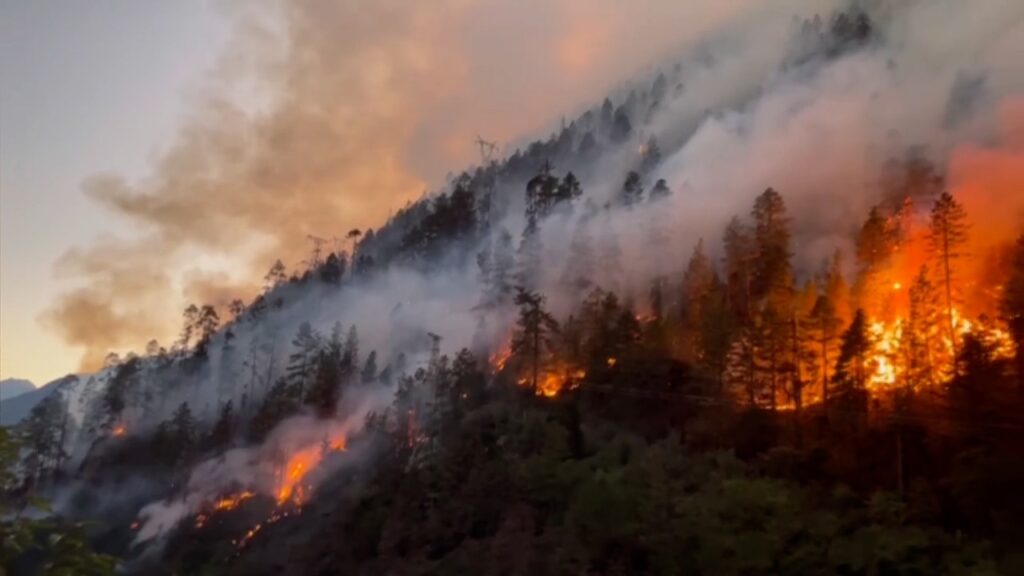
Universidad Técnica Federico Santa María (UTFSM) has an opening for a Fire Research Postdoctoral Scholar. The position is opened in the context of the research project Anillo ACT210052 ‘Understanding the connections between abiotic stress and forest vulnerability to fires” (β-HiMap project), funded by the “Anillos Regular de Investigación en Ciencia y/o Tecnología 2021” program by the Chilean government through SCIA-ANID. The project aims to identify and quantify the links between abiotic stress and flammability of Chilean forest species.
Job description
Position 1: The postdoctoral scholar will be responsible for developing a comprehensive and challenging flammability framework which includes detailed testing and state-of-the-art theoretical and numerical modeling. The experimental methodology will follow the protocols implemented for the two bench-scale apparatuses which were developed during the α-HiMap project and will enhance these devices through the implementation of non-intrusive laser-based diagnostics to locally and globally study solid-gas and gas-gas processes relevant for the continuous and discontinuous ignition and burning rate of SL/L/D foliar fuels. The team will further develop the theoretical results of α-HiMap, aiming to study the effects of fuel moisture content and live-dead fuels on ignition, while additionally performing scaling analyses on the burning rate of these fuels under different configurations.
Work will be carried out in collaboration with Chilean, American and French universities, and international centers, including UAI, UC-Berkeley, University College London, Worcester Polytechnic Institute, University of Sao Paulo, CSIRO and INRAE – Aix-Marseille Université. The scholar will be encouraged to apply for postdoctoral grants offered by ANID.
Position 2: The postdoctoral scholar will be responsible for identifying the physiological and biochemical responses of stressed/non stressed, live/dead (SL/L/D) foliar fuels through a set of established laboratory and analytical methodologies. Ultimately specific stress markers will be determined which have influence on fuel flammability and have the ability to be detected under field conditions in subsequent stages of this project by different techniques, ranging from direct sampling to remote sensing. This will provide novel tools to model and predict fire hazards of forest ecosystems in real time.
Work will be carried out in collaboration with Chilean, American and French universities, and international centers, including UAI, UC-Berkeley, University College London, Worcester Polytechnic Institute, University of Sao Paulo, CSIRO and INRAE – Aix-Marseille Université. The scholar will be encouraged to apply for postdoctoral grants offered by ANID.
Benefits
Compensation includes a competitive salary and medical insurance (1.884.000 CLP gross per month). The location is in Valparaiso, Chile. The duration of the postdoctoral position is 12 months, with a start date in mid April 2022, or as soon as possible.
How to Apply
The posting shall remain open until the position is filled, however for full consideration, please apply until March 31, 2022. First selection will be notified shortly after, and selected candidates for the post will be called for an interview. Availability to start working immediately will be considered in the evaluation.
Please send a dossier with the following documents andres.fuentes@usm.cl and rodrigo.demarco@usm.cl:
- Cover Letter.
- CV (including list of publications and research projects).
- Certificate of PhD degree and a half-page file describing your thesis.
- One recommendation letter from an academic/doctoral thesis advisor.
For more information and application, contact professor Andrés Fuentes.
Desired skills and experience
- PhD in Engineering or Physical Sciences/Applied Mathematics, with a strong research background in combustion.
- Degree acquisition should not be older than January 2018. In the case of women, a year can be added for each child born within this time, prior presentation of birth certificate.
- Experience in combustion and flame diagnostics is desired.
- Experience in development and/or application of heat transfer models.
- Demonstrated research experience in bench-scale laboratory and analytic methodologies.
- Keen interest in extending mathematical and scientific computing techniques to new problems.
- Excellent verbal and written communication skills.
- Ability to work productively both independently and as part of a diverse and multidisciplinary team.About the employer
UTFSM was the first Latin American university to offer a doctoral program in Engineering (since 1962) and has a strong emphasis on scientific research as well as on technological higher education. The Energy Conversion and Combustion Group (EC2G) from UTFSM is one of the leading research labs in combustion in South America. Research at EC2G has focused on the development of experimental and numerical techniques to improve the understanding of the physical and chemical phenomena controlling combustion processes, with applications in energy conversion and fire safety.
IAFSS Newsletter – Fire Safety News No 47
The December 2021 edition of the IAFSS Newsletter, the official newsletter of the IAFSS is now available.
HBIF IAFSS working group webinar series
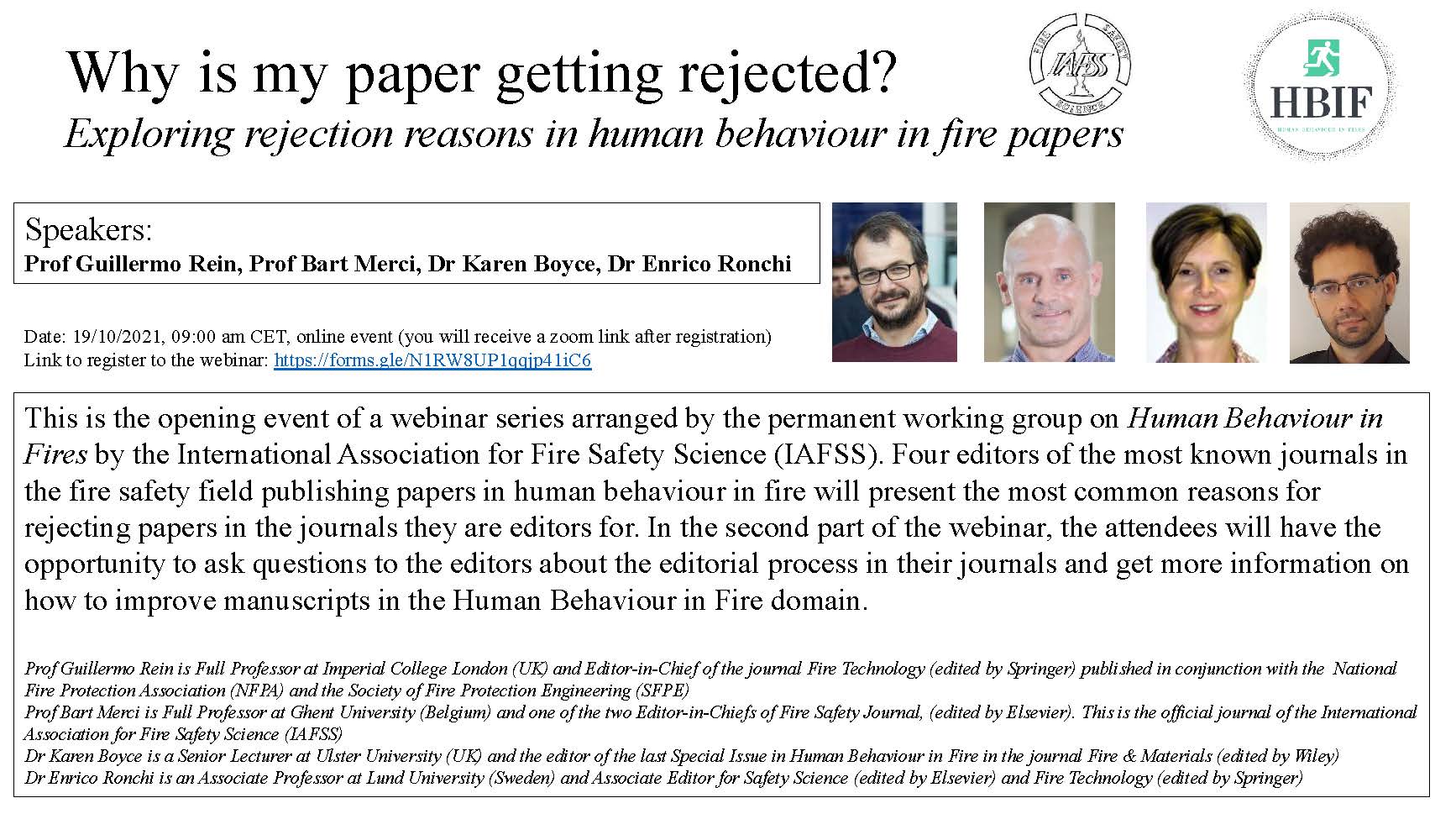
The HBIF IAFSS working group is starting a webinar series. The the first event will be held in October and the topic will be academic publishing. The webinar includes some of the key editors in our field. You can read more in this flyer.
PhD Opportunity in Fire Engineering at University of Canterbury, NZ
Applications are invited for a fully funded three-year PhD scholarship in computational fluid dynamics simulation of wildfires, to work under the supervision of Dr Andres Valencia (UC Senior Supervisor), Dr Greg Baker (Fire Research Group Limited), Dr Tara Strand and Mr Grant Pearce of Scion, and Professor Daniel Nilsson and Dr Marwan Katurji of UC. The scholarship is co-funded by Fire Research Group Limited and the University of Canterbury.
Se more information here.
IAFSS NEWSLETTER – Fire Safety News No 46
Please click here to view the latest issue of the IAFSS Newsletter.
Notice of Plans for IAFSS General Meeting, Part 2
Dear IAFSS Member,
I trust you are doing well. I am writing with information about the 2021 IAFSS General Meeting, Part 2, which will be held on 30 April 2021, 13:00 UTC. The draft agenda for the meeting can be found here.
First, thank you to those who were able to join us on 24 March 2021 for Part 1 of the 2021 IAFSS General Meeting (GM). This was our first ever virtual GM, and although we had a few minor glitches, the meeting went well. The draft minutes for the GM Part 1 are attached to the draft agenda for the GM Part 2. As you will see, the proposed amendments to the Rules of the Association were approved, which formally allows us to proceed with a virtual GM Part 2. Click here to view the Rules of the Association.
As previously noted, we are changing the procedures for the GM Part 2, taking into account lessons learned and experiences gained from the GM Part 1, and aiming for a more interactive meeting.
- To limit the potential for non-members to join the meeting, all eligible members will be required to pre-register to attend the meeting. You will need to contact the Secretariat to pre-register. Upon verification of eligibility, you will be sent a meeting link and password.
- To assist us in checking attendees against our membership list, when logging into the meeting, please enter using your name in English as it correlates to your membership application.
- Since the meeting time is limited, please try to log in five (5) minutes prior to the start of the GM. Please check your hardware and connections prior to the meeting time.
- As with the GM Part 1, we are aiming to have any action required for voting to be presented in a form that votes can be simple ‘approve / disapprove / abstain’ where possible. This is largely driven by the limited time for discussion and the time allotted for the meeting.
- In the case where there is a vote that requires a choice between options (for example, if there are three candidates for Scrutineer and only two positions available), each option will be voted on separately, and the options receiving the highest vote counts will be taken as approved.
- Details of actions requiring votes, as initiated by the Committee, will be posted to the IAFSS website by 17 April for review, and as appropriate, to allow time to submit proxy votes by members who cannot attend the 30 April meeting. It is expected that this will include:
- Approval of past minutes of General Meetings of the Association (14 June 2017 and 24 March 2021)
- Approval of the Treasurer’s report
- Nominees for Honorary Auditors of the Association (two positions)
- Nominees for Scrutineers of the Association (two positions)
- Because time for discussion in the virtual GM Part 2 will be limited, any member who nominates members for the position of Honorary Auditor or Scrutineer, or proposes any action that will require a vote, or wishes to raise an item for discussion under Any Other Business, must provide text of the item in writing to the Honorary Secretary no later than 13 April 2021. This is to allow time for review, confirmation, and posting of the item by 17 April, and if needed, time to permit submittal of proxy votes by members who cannot attend.
- Due to time limitations, a maximum of five (5) minutes will be allotted for questions / discussion on any agenda item.
- Proxy voting forms, for those unable to attend, will be available on 17 April, once items for voting have been identified and confirmed. Note that it is intended to simplify the proxy form such that proxy votes will be given to the Honorary Secretary, unless another person is specifically designated. If another person is designated, confirmation is required from the designee, in advance of the GM, that they (a) agree to serve as proxy and (b) confirm that they will be in attendance at the meeting. This is to help assure that the proxy vote will be delivered and counted appropriately.
As a member, your participation in General Meetings and your vote on issues of importance to the Association is critically important. We ask that all who can attend and participate do so. For those unable to attend, and who would like to exercise their right to vote, you are asked to provide your proxy vote to the Honorary Secretary no later than 27 April.
Also, we appreciate that options for voting and discussion remain somewhat limited. However, we have presented a more flexible and participative arrangement for Part 2 of the GM, within the limitations of time and technology being used. Developing a more robust on-line GM approach for future meetings will be an action on the Committee going forward.
Again, thank you for your understanding and flexibility, and if you have questions for clarification, or comments on what has been proposed, please let me know. Thank you.
Respectfully submitted,
Brian Meacham
IAFSS Honorary Secretary ad interim
Sheldon Tieszen Student Award Recipients Announced
The Sheldon Tieszen Student Awards are sponsored by the International FORUM of Fire Research Directors (http://fireforum.org/), a group composed of the Directors of fire research organizations throughout the world, which aims to reduce the burden of fire (including the loss of life and property, and effects of fire on the environment and heritage) through international cooperation on fire research. The award recognizes excellence in an IAFSS symposium paper in fire safety science by a student making a significant contribution to that paper.
Recipients:
Elias Bearinger, M.S., Awarded for the paper “Localized Heat Transfer from Firebrands to Surfaces” by Elias D. Bearinger, Jonathan L. Hodges, Fengchang Yang, Christian M. Rippe, and Brian Y. Lattimer, Advised by Brian Y. Lattimer at Virginia Tech, USA.
Mohamed Beshir, Ph.D. Awarded for the paper “Semi-empirical model for estimating the Heat Release Rate required for flashover in compartments with thermally-thin boundaries and ultra-fast fires” by M. Beshir, Y. Wang, F. Centeno, R. Hadden, S. Welch, and D. Rush. Advised by David Rush, University of Edinburgh, UK.
Jian Chen, Ph.D., Awarded for the paper “Why are Cooktop Fires so Hazardous?” by Jian Chen, Yue Hu, Zhigang Wang, Ki Yong Lee, Sung Chan Kim, Matthew Bundy, Marco Fernandez and Anthony Hamins, Advised by Anthony Hamins at National Institute of Standards and Technology.
Carmen Gorska, Ph.D., Awarded for the paper “Fire Dynamics in Mass Timber Compartments” by authors Carmen Gorska, Juan P. Hidalgo and Jose L. Torero., Advised by Juan P. Hidalgo, at the University of Queensland, Australia.
Juan Cuevas, Ph.D., Awarded for the paper “Flame extinction and burning behaviour of timber under varied oxygen concentrations” by Juan Cuevas, José Torero, and Cristian Maluk, Advised by Cristian Maluk, Juan Hidalgo and José Torero at The University of Queensland, Australia..
Lauren B. Gagnon, Ph.D., Awarded for the paper “Effect of Reduced Ambient Pressures and Opposed Airflows on the Flame Spread and Dripping of LDPE Insulated Copper Wires” by Lauren Gagnon, Carlos Fernandez-Pello, James L. Urban, Van P. Carey, Yusuke Konno, and Osamu Fujita, Advised by Carlos Fernandez-Pello and Van P. Carey at the University of California, Berkeley, US.
Vinny Gupta, Ph.D. Awarded for the paper “Ventilation effects on the thermal characteristics of fire spread modes in open-plan compartment fires” by Vinny Gupta, Juan P. Hidalgo, Adam Cowlard, Cecilia Abecassis-Empis, Agustin Majdalani, Cristian Maluk, and Jose L. Torero. Advised by Dr Juan P. Hidalgo at The University of Queensland, Australia.
Qi Li, Ph.D., Awarded for the paper “Symmetric modeling of the thermal actions in a structural fire experiment on a long-span composite floor beam in a compartment,” by Qi Li, Chao Zhang, and Guo-Qiang Li. Advised by Chao Zhang, Wuhan University (China) and conducted in cooperation with NIST (USA).
Andrea Lucherini, Ph.D., Awarded for the paper “Influence of heating conditions and initial thickness on the effectiveness of thin intumescent coatings” by Andrea Lucherini, Juan P. Hidalgo, Jose L. Torero, and Cristian Maluk, Advised by Cristian Maluk, Jose L. Torero and Juan P. Hidalgo at The University of Queensland, Australia.
Martina Manes, Ph.D., Awarded for the paper “Assessing fire frequency and structural fire behaviour of England statistics according to BS PD 7974-7” by Martina Manes and David Rush, Advised by David Rush at the University of Edinburgh, UK
Karina Meerpoel Pietri, Ph.D., Awarded for the paper “Determination of the critical conditions leading to the ignition of decking slabs by firebrands” by authors Karina Meerpoel Pietri, Virginie Tihay-Felicelli, and Paul-Antoine Santoni., Advised by Virginie Tihay-Felicelli, and Paul-Antoine Santoni at the University of Corsica, France.
Natalia Flores Quiroz, Ph.D., Awarded for the paper “Developing a Framework for Fire Investigations in Informal Settlements” by Natalia Flores, Richard Walls and Antonio Cicione, Advised by Richard Walls at Stellenbosch University, South Africa.
Xingyu Ren, Ph.D., Awarded for the paper “Temperature measurement of a turbulent buoyant ethylene diffusion flame using a dual-thermocouple technique” by Xingyu Ren, Dong Zeng, Yi Wang, Gang Xiong, Gaurav Agarwal, and Michael Gollner, Advised by Michael Gollner at the University of California, Berkeley and Dong Zeng at FM Global
Felix Wiesner, Ph.D., Awarded for the paper “Influence of ply configuration and adhesive type on cross-laminated timber in flexure at elevated temperature” by Felix Wiesner, Susan Deeny, and Luke Bisby, Advised by Luke Bisby and Rory Hadden. Work completed at The University of Edinburgh, Felix Wiesner now at The University of Queensland
Nan Zhu, Ph.D., Awarded for the paper “Transitional flame-spread and fuel-regression behaviors under the change of concurrent wind ” by Nan Zhu, Xinyan Huang, Jun Fang, Lizhong Yang and Longhua Hu., Advised by Longhua Hu at the University of Science and Technology of China, China.
 Dr Natalia Flores-Quiroz is a researcher with experience in fire safety engineering. She worked for five years as a fire safety engineer in the mining industry before joining academia. She holds a MSc in fire safety from Ghent University, and her PhD focused on Fire investigations in Informal Settlements. Currently she is a lecturer at Stellenbosch University, where her main research areas are reconstruction of incidents in low-income settlements (i.e., informal settlements, refugee camps) and wildland urban interface (WUI) fires.
 Bronwyn Forrest is a 3rd year PhD student at the University of Waterloo, conducting multi-disciplinary research investigating human physiological response to fire exposure. Bronwyn graduated in 2017 with a BSc. Honours Kinesiology and in 2020 with a MASc. Mechanical & Mechatronics Engineering (Heat Release Rate in Ventilation-Limited Furniture Fires) before merging her two degrees in her PhD research. As a senior graduate student in the Fire Research Group, Bronwyn spear-heads large-scale fire experiments, mentors junior graduate and undergraduate students, and has recently set-up a new ‘human exposure lab’ at the Fire Research Facility where she leads new research in that area. Since her induction into the world of fire science, Bronwyn has grown more and more passionate about the multi-faceted nature of emerging fire safety challenges. Through innovative research, she hopes to make meaningful contributions that help shape changes to fire safety over the course of her career.
 Dr. (HDR) Eric Guillaume has worked in fire sciences since 1998. He formerly led the fire behaviour department of SNCF (French Railway), then changed company in 2005 to join LNE (The French National Laboratory for Testing and Metrology) as head of Fire safety studies department, and later as head of research for whole testing activities of LNE. Nowadays (since 2015), he works for Efectis France, first as Technical Director and more recently as General Manager of the company, leading one of the most important fire testing and fire safety engineering companies in Europe (With approx. 180 people and 28 M€ turnover)
 Dr. Albert Simeoni is Professor and the Department Head of Fire Protection Engineering at Worcester Polytechnic Institute (WPI). He is the WPI site director of the Wildfire Interdisciplinary Research Center (WIRC), an Industry-University Cooperative Research Center (IUCRC) of the National Science Foundation (NSF) in the United States. Dr. Simeoni has served IAFSS by being chair or co-chair of the Wildland Fire track (2014, 2020 and 2023), Co-chair of the Awards Committee for the Best Thesis Awards (2023), Associate-Editor of Fire Safety Journal (2010-2015), member of the Editorial Board of Fire Safety Journal (since 2016), and Contributing Editor of Fire Safety Science News (since 2011).
 Brian J. Meacham, PhD, PE (CT&MA), EUR ING, CEng (UK), FIFireE, FSFPE, is the Managing Principal of Meacham Associates. He develops risk-informed performance-based solutions to complex building and infrastructure challenges, provides peer-review services, and undertakes building and fire regulatory system studies. He also conducts research in these areas as well as in sustainable and fire resilient built environments and fire safety technologies. Brian has authored more than 300 publications, given more than 300 presentations and has been awarded more than $4M in research funding. His prior positions include Associate Professor of Fire Protection Engineering at Worcester Polytechnic Institute, Principal at Arup, Technical Director and Research Director at SFPE, and fire safety engineer in Europe and the USA. Brian is Chair of the ICC Performance Code Committee, Chair of the NFPA Technical Committee on Fire Risk Assessment Methods, Immediate Past Chair of the International Association for Fire Safety Science (IAFSS), a Past President of the SFPE, and a past Chair of the Inter-jurisdictional Regulatory Collaboration Committee (IRCC). He is a licensed Professional Engineer in CT and MA, a Chartered Engineer and Fellow of the Institution of Fire Engineers (UK), a registered European Engineer (EUR ING), a Fellow of the SFPE, and a Fulbright Global Scholar.
 Kazunori Harada is a professor of architecture & architectural engineering at Kyoto University, Japan. He has a career in fire research for over 35 years. He has authored 14 IAFSS symposium papers. His expertise covers the fire resistance of construction materials, smoke movement and control, burning of combustibles in open and compartment, performance-based code & design of buildings and so on. He serves as a vice president of AOAFST, Asia-Oceania Association of Fire Science and Technology. He also serves as the Convenor of ISO/TC92/SC4 WG9, calculation methods for fire safety engineering (FSE), which develops calculation standards concerning FSE.
 Enrico Ronchi is an Associate Professor at Lund University, Sweden. His research and education activities are focused on evacuation and human behaviour in case of building fires and wildfires. His work has been published in over 150 publications (including >90 peer-reviewed journal papers). He is currently Associate Editor for the journals Fire Technology and Safety Science and member of the editorial board of the Fire Safety Journal.
 Jennifer Wen is currently Professor of Energy Resilience in the School of Mechanical Engineering Sciences, University of Surrey as Professor. Previously, Jennifer held positions at Computational Dynamics Limited (founding vendor of STAR-CCM), British Gas plc, South Bank University, Kingston University London, and University of Warwick. She is a Fellow of the Institution of Mechanical Engineers and Vice-Chair for Research for the International Association for Fire Safety Science. Jennifer is also a member and sub-task leader of the European Safety Panel on Hydrogen Safety (EHSP) established by the Fuel Cell and Hydrogen Joint Undertaking (now Clean Hydrogen Partnership) of the European Commission. She is an Associate Editor for the Proceedings of the Combustion Institute.
 Dr Wojciech Węgrzyński is with ITB, that is the Polish Building Research Institute in Warsaw. He currently holds the position of the Deputy Head of Fire Research Department and the Professor of the Institute, and a Director at SFPE Europe. He is the Author of 40 peer-reviewed papers published in all of the primary FSE journals. His main area of interest is the fundamentals of compartment fire dynamics and standardized fire testing, and also: use of computational fluid dynamics in fire, wind and fire interaction and evaluation of the effects of the spread of smoke in buildings. His research is focused on the impact of the architectural context of the building on the smoke control performance, as well as finding solutions to make the smoke exhaust systems cheaper and more efficient. Member of the Sub-committee for Research of the IAFSS. 2018 NFPA Harry C. Bigglestone Award Recipient; 2019 Jack Watts Award Recipient; 2020 SFPE 5 Under 35 Award Recipient. Member of Editorial Board of ‘Fire Technology. Hosts a fire podcast at
  Dr. Shuna Ni is an Assistant Professor in the Department of Fire Protection Engineering at the University of Maryland, College Park. She received her Ph.D. degree at Texas A&M University in 2018 and her Master’s degree at Tongji University in 2013. Dr. Ni’s research focuses on fire forensics, structural fire engineering, WUI fire resilience, fire safety of tall mass-timber buildings and fire-related multiple hazards. Her research has been funded by National Science Foundation, National Institute of Justice, Fire Protection Research Foundation, University Transportation Centers under the Department of Transportation, Grand Challenges Grants Program at the University of Maryland and industrial partners.
 Brian Lattimer, Ph.D. is a Professor in Mechanical Engineering at Virginia Tech where he performs experimental and computational research on fire safety and disaster resilience. He has nearly 30 years of experience in fire related research. His research areas include material behavior in fires, fire dynamics, suppression agents, heat transfer from fires to surfaces, structural response during fire, and firefighting technology.
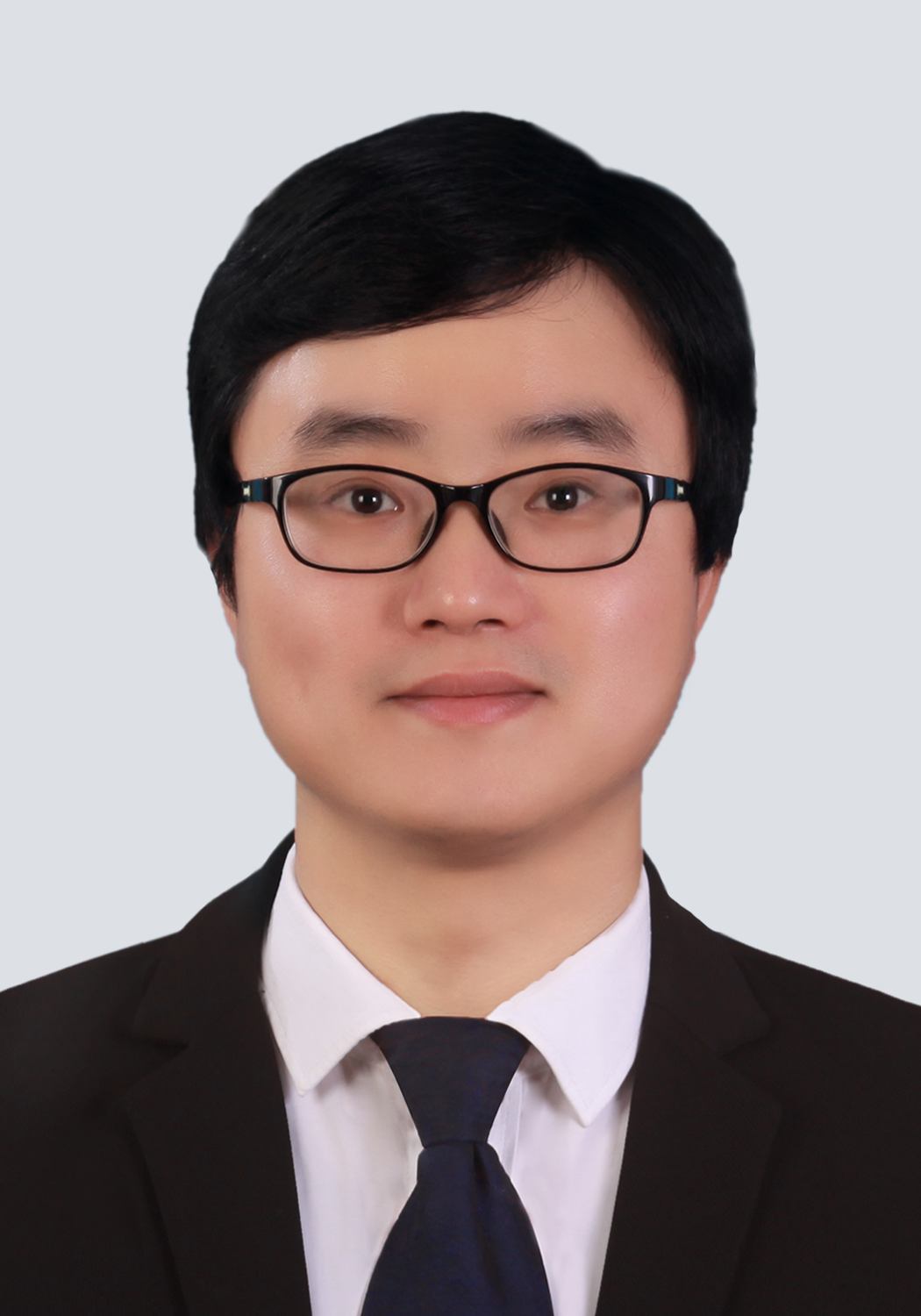 Yu Wang is a professor at the State Key Laboratory of Fire Science, University of Science and Technology of China (USTC). He got joint Ph.D. from USTC and the City University of Hong Kong in 2016 and had working experience at the University of Edinburgh, Worcester Polytechnic Institute and National University of Singapore before returning to China in 2020. His primary research areas are high-rise building fire and large outdoor fire. Yu has published over 50 SCI journal papers, and is currently an Associate Editor in Fire Technology and Editorial Board Member in Fire Safety Journal. He initiated the first English fire course at USTC, Introduction of Fire Dynamics, reported by China News and People’s Daily Online (over 260,000 audiences). In recent years, he has received SFPE Global 5 Under 35 Award, Youth May Fourth Medal (Anhui Province), Young Faculty Career Award (USTCAF), and some Best Paper/Presentation/Poster/Image Awards in IAFSS or AOSFST.
 ROGAUME Thomas is an Professor at the University of Poitiers – Pprime Institute (UPR3346 CNRS), FRANCE.
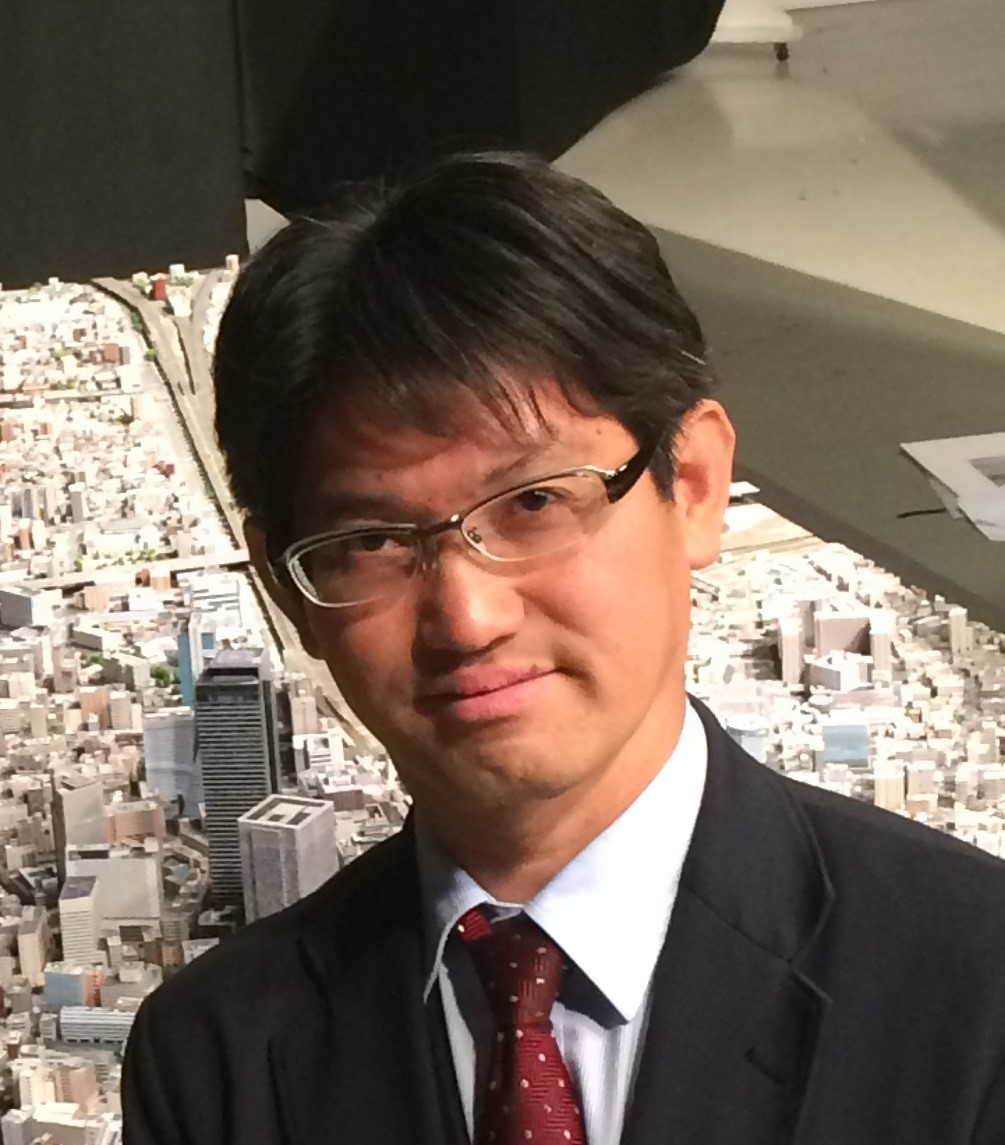 Prof. Yuji Nakamura is Full Professor in Department of Mechanical Engineering, Toyohashi University of Technology (TUT), appointed as Affiliate Full Professor in Center for Fire Science and Technology, Tokyo University of Science (since 2014). He currently serves the Head of Energy Conversion Laboratory and appointed as Department Chair since 2024. Prof. Nakamura has made professional service in Fire Science Community served as Management Committee of IAFSS during 2021-2023, worked as Co-chair of LOC in the most recent IAFSS symposium at Tsukuba, acting Associate Editor of Fire Technology since 2014 and board member of Fire Safety Journal since 2017.
 Dr Felix Wiesner is an Assistant Professor at the University of British Columbia and study the role of engineered timber in fire safety. I work in the Faculty of Forestry as part of the Wood Science department. My research focus has mostly been experimental, considering fire dynamics in timber compartments and the structural fire capacity of engineered timber products. In addition, I am interested in the performance of timber in exterior building or infrastructure setting. This closely interfaces with wildfire considerations for the wildland urban interface (WUI), especially when it comes to smouldering.
 Arnaud Trouvé is Professor and Chair in the Department of Fire Protection Engineering at the University of Maryland in College Park, USA. He joined the Faculty in 2001 with a Ph.D. (1989) and Engineering Degree (1985) from École Centrale of Paris, France, and with previous experience as a combustion research engineer. Professor Trouvé’s research interests include fire modeling and Computational Fluid Dynamics (CFD); application of data assimilation to fire and combustion; and physical modeling of combustion- and fire-related phenomena, including compartment fires, wildland fires and explosions. Professor Trouvé is a Fellow of the Combustion Institute and the recipient of the 2017 FORUM Sjölin Award. He has served on the editorial boards of the Proceedings of the Combustion Institute, Progress in Energy and Combustion Science, Combustion and Flame, and Fire Technology, and is currently on the editorial boards of Combustion Theory and Modelling and the Fire Safety Journal. Professor Trouvé is also a past Chair of the US Eastern States Section of the Combustion Institute (ESSCI) and a past Member of the Executive Board of the International Association for Fire Safety Science (IAFSS). He is a co-Chair of a recent initiative endorsed by IAFSS and called the “IAFSS Working Group on Measurement and Computation of Fire Phenomena” (the MaCFP Working Group) and the past Chair of a new network of leading higher-education institutions and research laboratories in fire safety engineering called the International Fire Safety Consortium (IFSC).
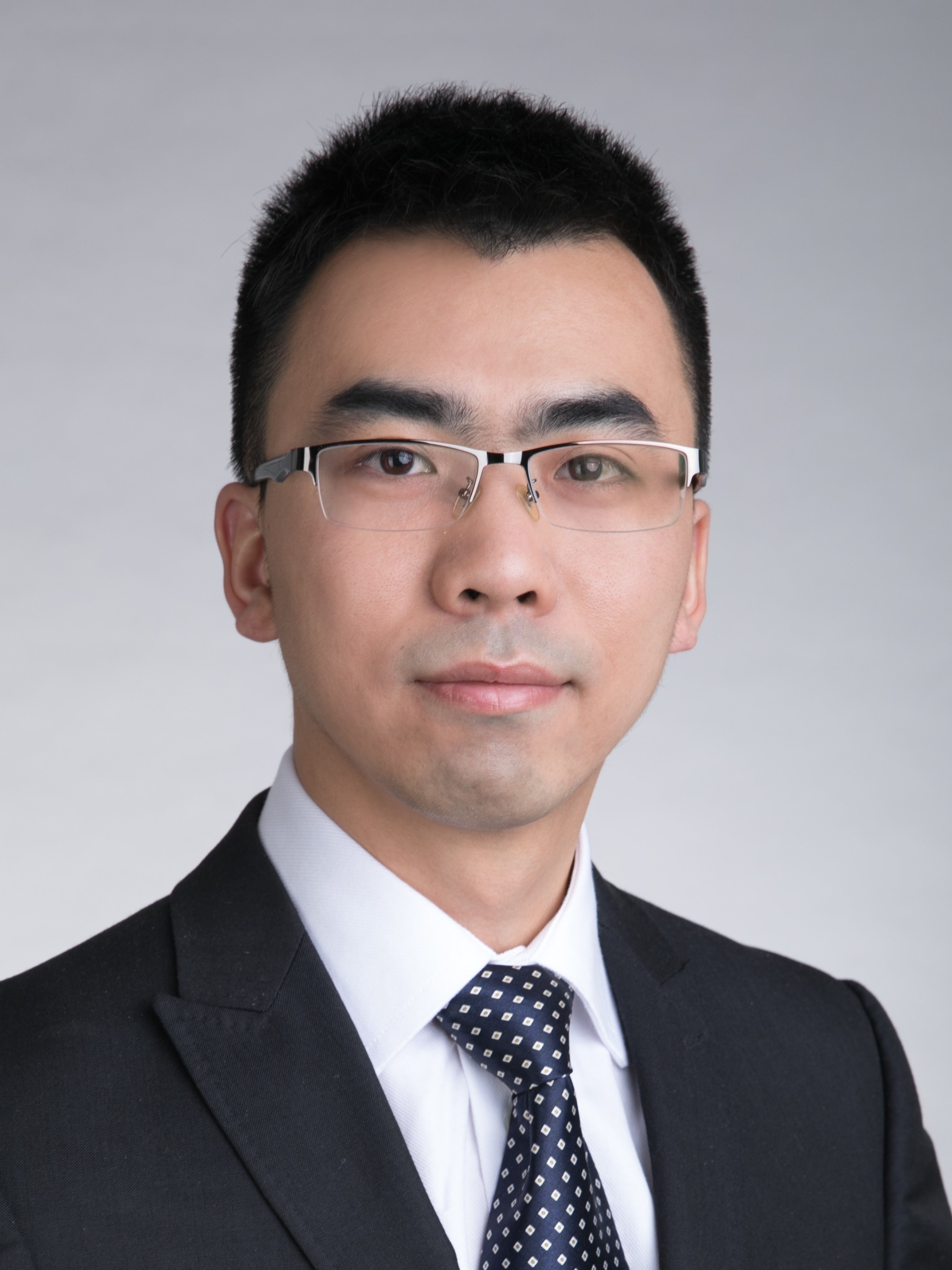 Dr Xinyan Huang is an Associate Professor at The Hong Kong Polytechnic University and the Deputy Director of the Research Centre for Fire Safety Engineering. He received his PhD from Imperial College London, MSc from UC San Diego, and BEng from Southeast University, and was a Postdoc at UC Berkeley. Dr Huang is a Combustion Scientist and a Fire Safety Engineer who has co-authored over 200 journal papers. He is an Associate Editor of Fire Technology and International Journal of Wildland Fire, an editorial member of J. Building Engineering, Fire Safety J. and Fire and Materials, a Chartered Building Services and Fire Engineer, a committee member for HK Fire Safety Code, and a Fire Expert for HK High Court. He receives the NSFC Excellent Young Scientists Fund, Bernard Lewis Fellowship and Sugden Best Paper Award from Combustion Institute, “5 under 35” and Bono Award from the Society of Fire Protection Engineers (SFPE).